Dissolution Of Marriage in Costilla County
Costilla County handles dissolution of marriage cases through the 12th Judicial District Court. This court has authority over all divorce filings in the county. The Combined Court in San Luis processes petitions and responses for people who meet the 91-day residency rule set by C.R.S. § 14-10-106. Anyone seeking a divorce decree or case documents can request them from the clerk in San Luis. The court keeps all files on divorce actions filed in Costilla County. You need to know your case number to get fast service. The clerk can help you find old case files if you do not have the number.
Court Details
County Seat: San Luis
Judicial District: 12th
Population: ~3,500
Court Location and Contact
The 12th Judicial District Combined Court in San Luis handles all dissolution of marriage cases for Costilla County. This court is where you file a petition to start a case. It is also where you get copies of old divorce decrees. The clerk's office is open during regular business hours each week. Staff can tell you how to request records or file new documents.
You can reach the court through the state judicial system website at https://www.coloradojudicial.gov/courts/trial-courts/costilla-county. That page has contact details and local forms. The Colorado Judicial Branch main line is 720-625-5000 if you need help finding the right office. For questions about a specific case, call the clerk in San Luis directly.
Filing Requirements
To file for dissolution of marriage in Costilla County, one spouse must live in Colorado for at least 91 days before filing. The court looks at this rule under C.R.S. § 14-10-106. You do not need to prove fault. Colorado law says a marriage is over if it is irretrievably broken. That is the only ground you need. After filing, 91 days must pass before the court can grant a final decree. This waiting period gives both parties time to work out property division, child custody, and support issues.
The person who files the petition is called the petitioner. The other spouse is the respondent. When you file, the court issues automatic injunctions under C.R.S. § 14-10-107. These orders stop both people from selling or hiding assets while the case is open. They also protect children from being moved out of state without court approval. These rules help keep things fair during the divorce process.
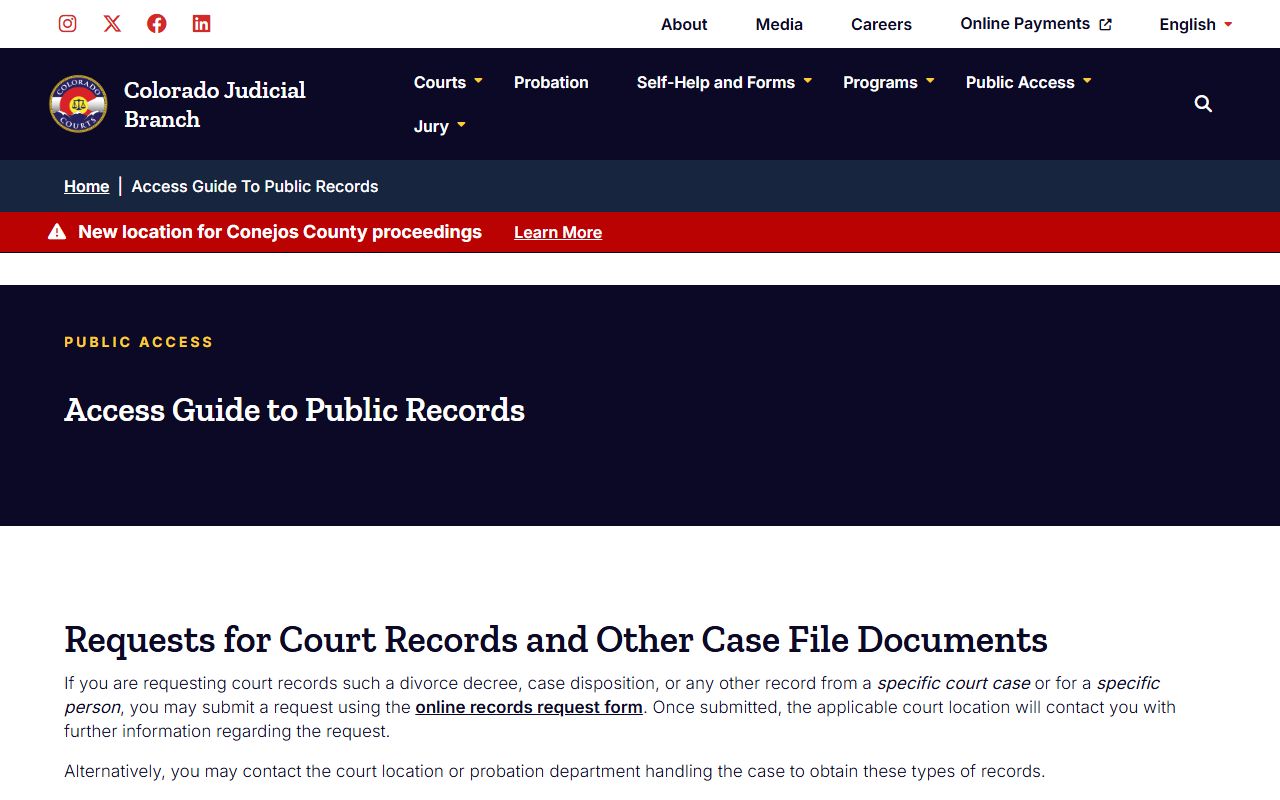
The Colorado Judicial Branch provides an access guide to public records that explains how to request court documents. This resource covers all types of court records, including dissolution of marriage files. You can submit requests online or contact your local court directly.
Court Fees
Filing a petition for dissolution of marriage costs $260 according to C.R.S. § 13-32-101. This fee is set by state law and applies in all Colorado counties. Filing a response costs $146. If you need to modify a final decree after 60 days, the motion fee is $105. These are the main costs most people pay.
Certified copies cost $20 per document. Regular copies are $0.25 per page. Parties to a case pay no more than $15 for all copies, no matter how many pages. If you cannot afford the filing fee, you may ask for a waiver. The court grants waivers to people who qualify under fee waiver rules. Forms for this are available at the clerk's office or online through the state judicial website.
Accessing Records
Dissolution of marriage records in Costilla County are public, but some parts may be restricted. The decree is usually available to anyone. Files with financial details or parenting plans may have limits. To get records, you can use the online request form at https://www.coloradojudicial.gov/recorddocument-request-form. The court processes most requests within three business days unless there are special issues.
You can also request records by contacting the clerk in San Luis. Bring your case number if you have it. That speeds up the search. If you are a party to the case, bring a photo ID. The clerk will tell you what documents are available and how much copies will cost. For very old records, check with the Colorado State Archives at https://archives.colorado.gov/collections/legal-records/divorce-records. They hold some historical divorce files from certain counties and time periods.
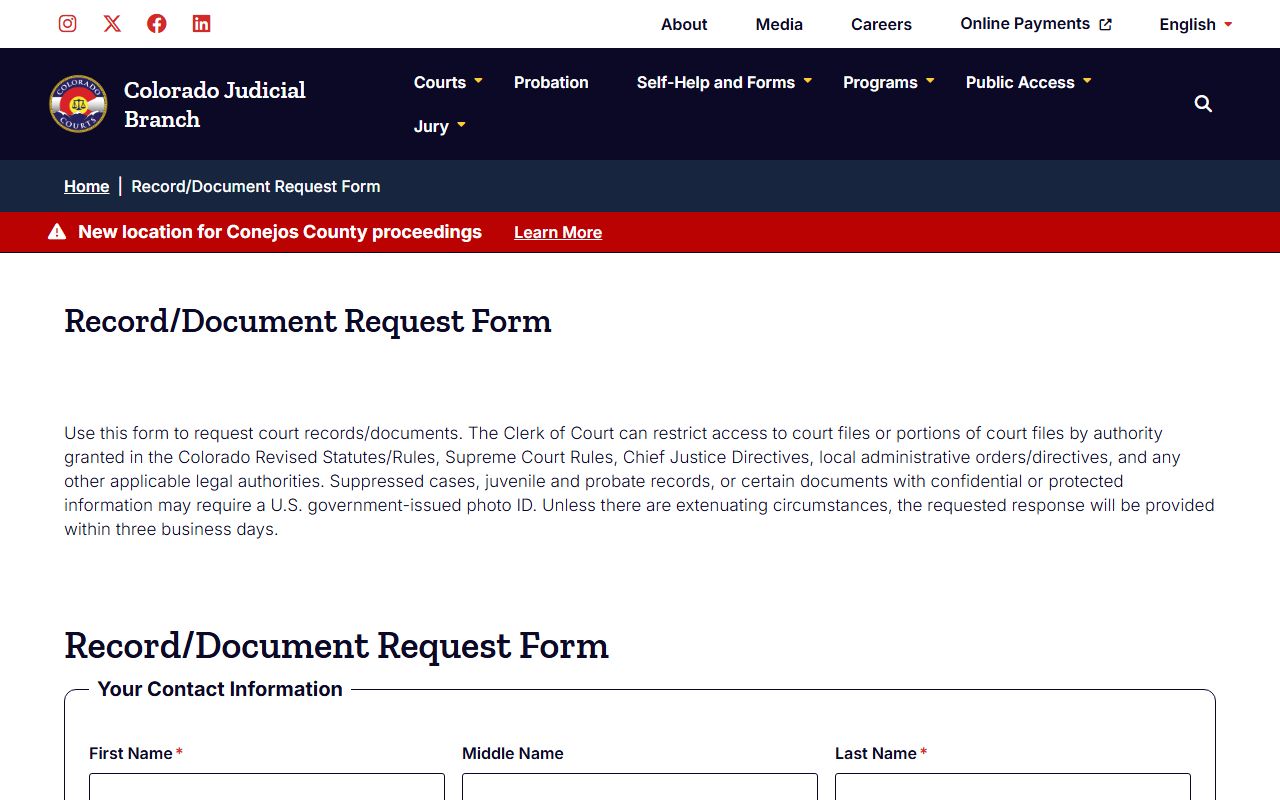
The state provides an online records request form that lets you ask for dissolution of marriage documents from any Colorado court. This form is easy to use and helps you get copies without visiting the courthouse in person.
Property and Support
When the court grants a dissolution of marriage, it must divide property and address support. Colorado divides marital property in a way that is fair, not always equal. The court looks at many factors under C.R.S. § 14-10-113. These include each spouse's contribution to the marriage, the value of property, and economic circumstances after the divorce. Separate property that one spouse owned before marriage usually stays with that spouse.
Spousal maintenance, also called alimony, may be awarded if one spouse needs support. The court follows advisory guidelines set out in C.R.S. § 14-10-114. The amount and length of maintenance depend on the marriage duration and the income of both parties. These are guidelines, not strict rules. The court can adjust them based on the facts of each case.
Legal Help
You do not need a lawyer to file for dissolution of marriage, but legal advice can help. The Colorado Judicial Branch offers self-help resources at https://www.coloradojudicial.gov/self-help/divorce-and-separation. This page has forms and instructions for people who represent themselves. It covers how to file a petition, how to respond to one, and how to ask for a decree without a hearing.
If your case is not contested, you may qualify to get your decree by affidavit. This means you do not have to go to court for a hearing. The court may also offer help through a family court facilitator or self-help center. Check with the clerk's office in San Luis to see what services are available locally. Some counties have volunteer lawyers who give free advice on certain days.
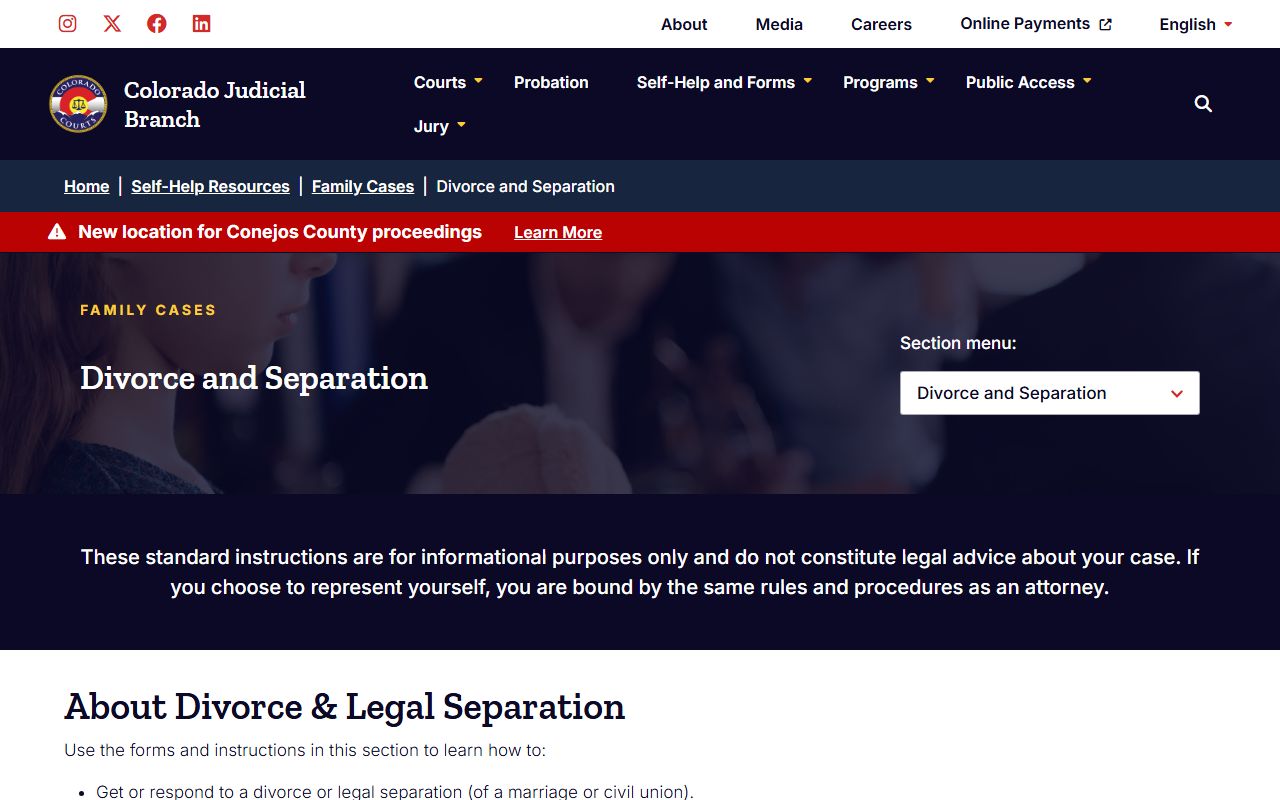
The divorce and separation self-help page provides forms, instructions, and guidance for people handling their own dissolution of marriage cases. This resource is helpful if you are filing without an attorney.
Name Restoration
If you want to restore your name to what it was before marriage, you can request that in your petition or response. There is no extra fee if you file this request within 60 days of the decree being signed. After 60 days, you must file a separate motion and pay a fee. The court will include the name change in your final decree if you ask for it at the right time.
Nearby Counties
Costilla County is in the 12th Judicial District along with Alamosa, Conejos, Mineral, Rio Grande, and Saguache counties. If your case was filed in one of those counties, you would request records from that county's court. Each county clerk keeps its own files. Links to nearby county pages: