
Denver County Dissolution Of Marriage
Dissolution of marriage cases in Denver County go through the District Court in the 2nd Judicial District. Denver is different from all other judicial districts in Colorado because it has four separate courts instead of one combined court. The District Court at 1437 Bannock Street handles domestic relations matters, which include dissolution of marriage and allocation of parental responsibilities. You can request court records online, by mail, or in person at the clerk's office in Room 256 of the Denver City and County Building.
Denver County Quick Facts
Denver District Court
Denver County is part of the 2nd Judicial District. This district is unique in Colorado. Unlike every other district, Denver has four separate courts: District Court, County Court, Probate Court, and Juvenile Court. Each court handles different types of cases and has its own clerk.
The District Court deals with felony criminal cases, civil cases, and domestic relations. Dissolution of marriage falls under domestic relations. If you need to file for dissolution or get copies of an existing case, you go to the District Court clerk's office. The office is in the Denver City and County Building at 1437 Bannock Street, Room 256. This is where all domestic matters are handled, separate from the Lindsey-Flanigan Courthouse that handles criminal cases.
You can visit the court's main page at coloradojudicial.gov/courts/trial-courts/denver-district for more info about the court and its divisions. The site has details about filing procedures, local forms, and courthouse hours for each location in Denver.
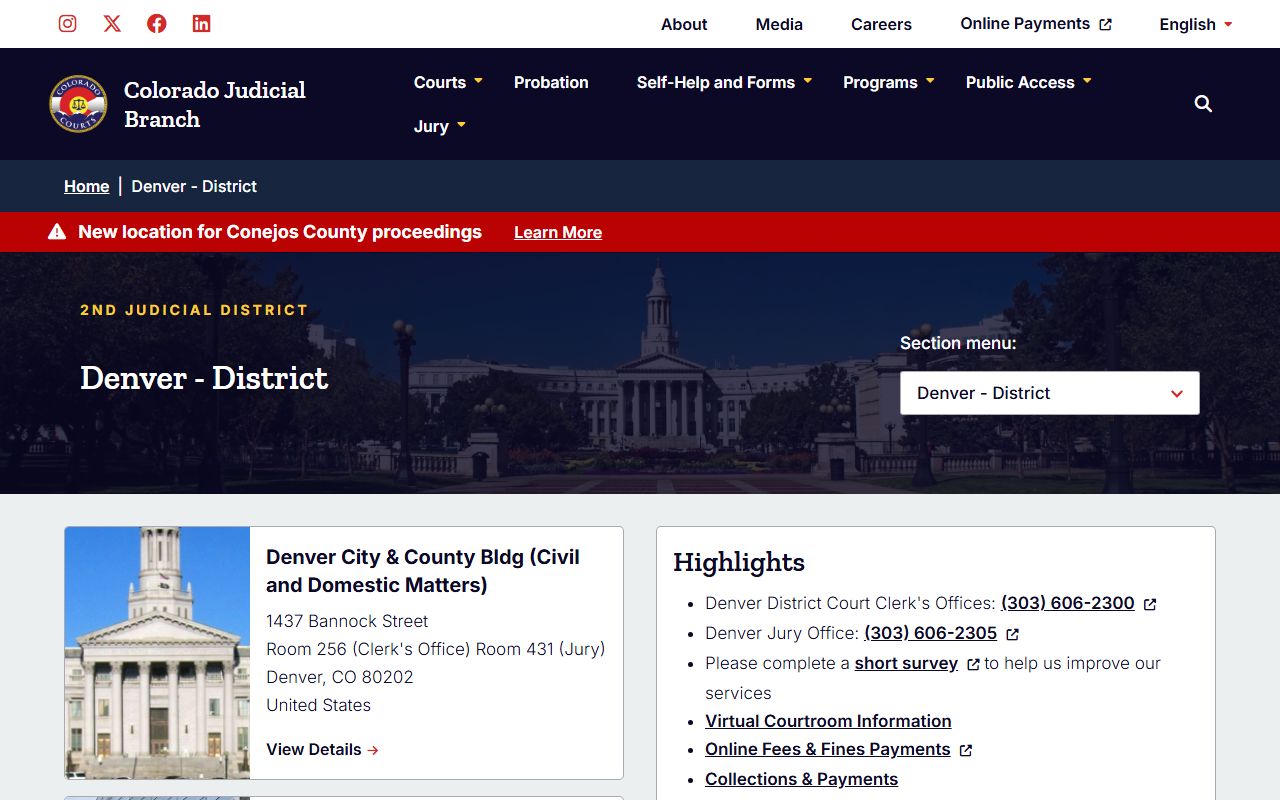
The clerk's office is open Monday through Friday from 8:00 a.m. to 4:00 p.m. If you plan to visit in person, check the website first for any changes to hours or closures. Staff can help you find case files and explain the process for getting copies.
File Dissolution Of Marriage In Denver
To file for dissolution in Denver County, you must meet Colorado residency rules. At least one spouse needs to have lived in Colorado for 91 days before filing. You file the petition for dissolution at the District Court clerk's office in Room 256 of the City and County Building.
The filing fee is $260. This fee is set by state law under C.R.S. § 13-32-101 and applies across all Colorado counties. A response to a petition costs $146 if the other party wants to file one. If you cannot afford the fees, you can ask for a fee waiver by filing an affidavit that shows your income and expenses. The judge will decide if you qualify.
When you file, an automatic temporary injunction goes into effect. This is required by C.R.S. § 14-10-107 as soon as the case starts. The injunction stops both spouses from hiding money, selling assets, or taking children out of state without court approval. It stays in place until the case ends or a judge changes it. This protects both parties during the case.
After filing, the other party must get a copy of the petition and has time to respond. The court cannot finalize the dissolution until 91 days pass from the date the other spouse was served or filed a response. This wait is part of Colorado law and gives both sides time to work out terms for property, support, and parenting.
Get Copies Of Denver County Records
Denver County offers several ways to request dissolution of marriage records. You can use the online form at coloradojudicial.gov/recorddocument-request-form to submit a request. Fill out the form with the case type, names of both parties, and the case number if you have it. Staff will review your request and contact you with the cost and payment options.
For email requests, send your info to denverdcrecordsrequest@judicial.state.co.us. Include the names of both parties, the case number, and what documents you need. Staff will let you know the fees and how to pay. Most requests are handled within three business days unless there are special issues with the case.
You can also visit the Records and Research counter in person. It is combined with the CV/DR clerk's office in Room 256 at 1437 Bannock Street. In-person services are available Monday through Friday from 8:00 a.m. to 4:00 p.m. If the record is on paper and not in the computer system, staff will have you fill out a records request form. They can tell you how long it will take to get the file if it is stored off-site.
Mail requests work too. Write to Attn: Records Dept., 1437 Bannock St. Room 256, Denver, CO 80202. Include the case details and a check or money order for the copy fees. Add extra if you need certified copies. The clerk will mail the copies back to you once payment clears.
Fees For Records In Denver County
Copy fees in Denver County follow the state schedule. Regular copies cost $0.25 per page for single-sided pages and $0.50 for double-sided pages. If you are a party to the case, the maximum fee for copies is $15 no matter how many pages you need. Non-parties pay per page with no cap.
Certified copies cost $20 per document. A certified copy has a seal and signature from the clerk. You need this type of copy for legal proceedings or to prove the dissolution officially. Regular copies are fine if you just need the info for personal use or reference.
Some requests may involve extra fees. If your file is stored off-site, the court may charge the actual cost to retrieve it. If the request takes more than one hour of staff time for research or redaction, the court charges $30 per hour in 15-minute increments. Ask the clerk ahead of time what the total cost will be so you can plan for it.
Denver County Court Records
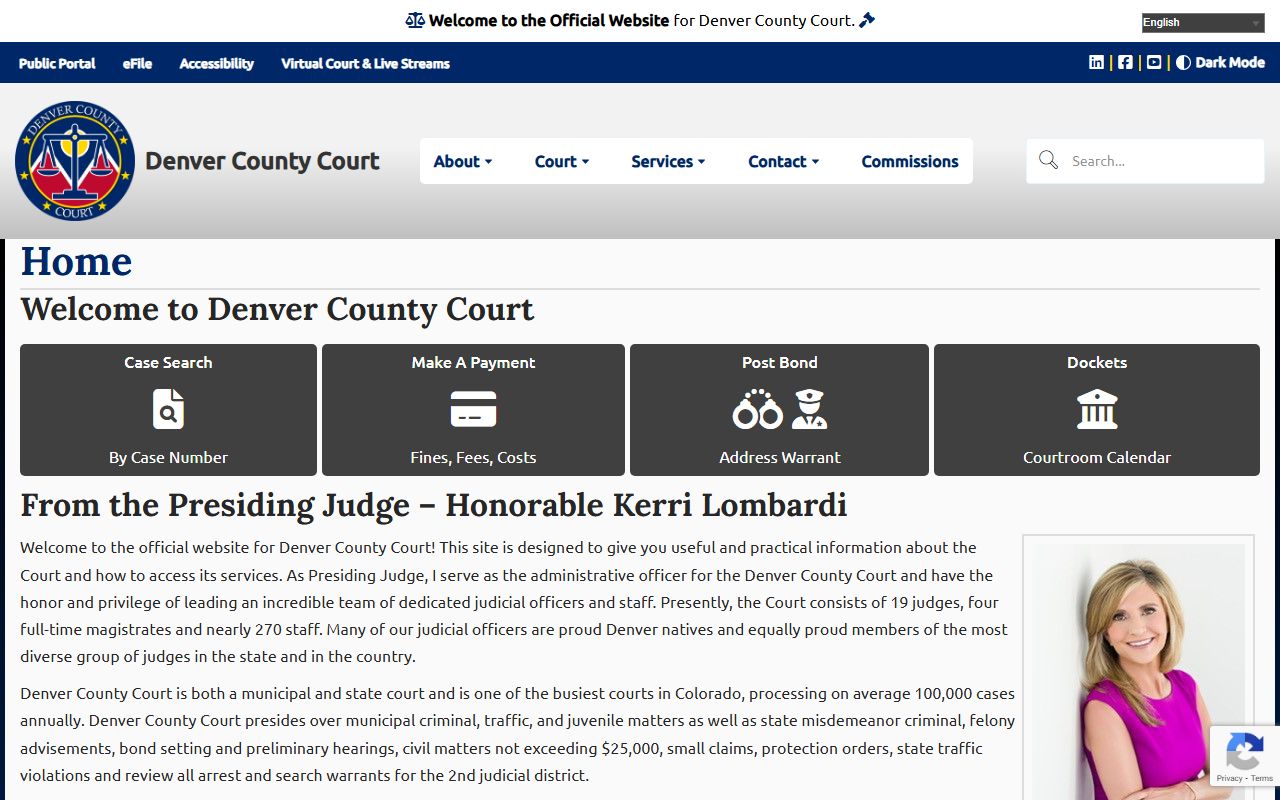
Denver County Court is a separate court from Denver District Court. The County Court handles smaller civil claims, traffic cases, misdemeanors, and some protection orders. It does not handle dissolution of marriage. If you need dissolution records, you must go to the District Court, not the County Court.
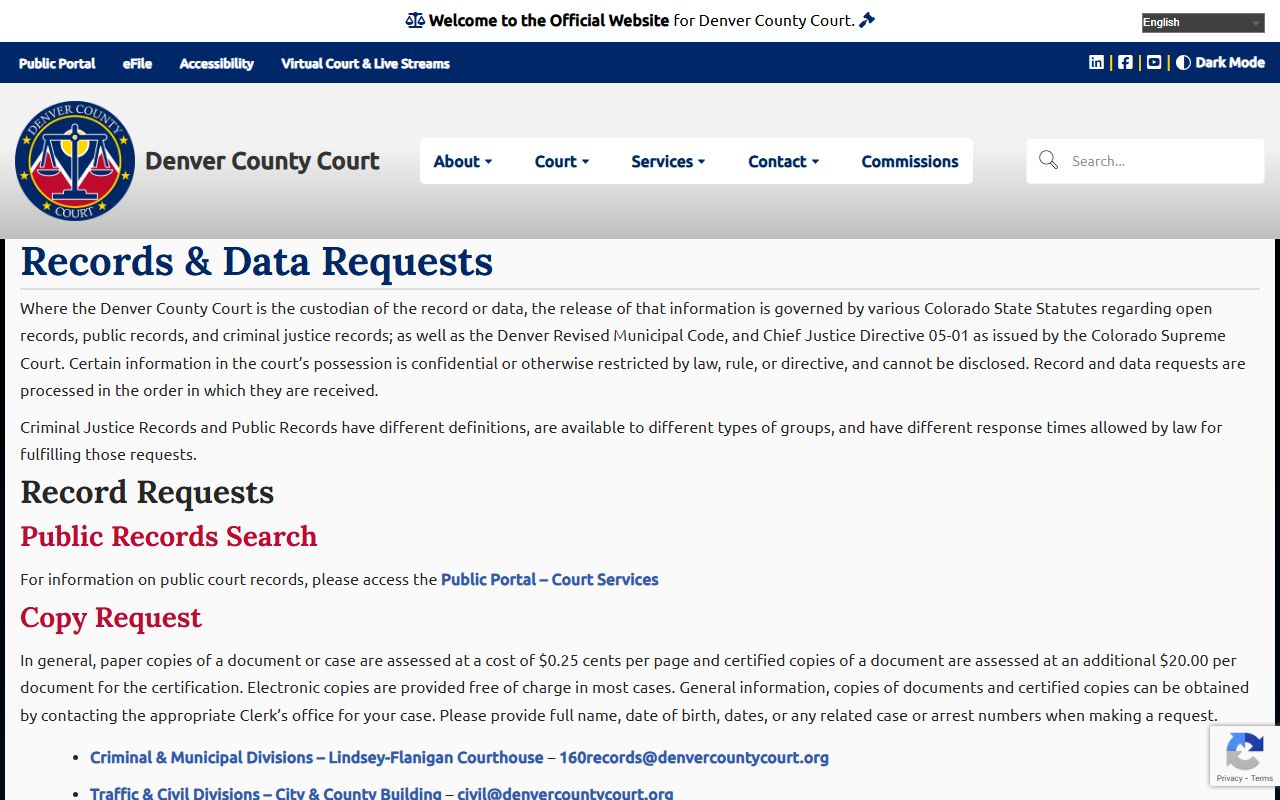
The Denver County Court website at denvercountycourt.org has info about what that court does and how to access its records. For data requests from the County Court, send an email to coradatarequests@denvercountycourt.org. Make sure you contact the right court for the type of record you need.
If you are not sure which court handled your case, call the District Court clerk at (303) 606-2300. Staff can look up the case and tell you where to find it. Denver's unique four-court structure can be confusing, so do not hesitate to ask for help if you need it.
The County Court also has a data page at denvercountycourt.org/data where you can find info about accessing certain types of records from that court. Again, this is only for County Court cases, not District Court dissolution matters.
Dissolution Laws In Colorado
Colorado uses a no-fault standard for dissolution. The law at C.R.S. § 14-10-106 says the only ground needed is that the marriage is irretrievably broken. You do not have to prove wrongdoing by either party. The court just needs to find that the marriage cannot be saved.
Property division in Colorado follows equitable distribution rules. Under C.R.S. § 14-10-113, the court divides marital property in a way that is fair, not necessarily equal. The judge looks at factors like how long you were married, what each spouse contributed, and each person's financial situation. Separate property that you owned before marriage stays with you.
Spousal maintenance follows advisory guidelines set by C.R.S. § 14-10-114. The amount and length of maintenance depend on combined income and how many years you were married. These are guidelines, not strict rules. A judge can adjust them based on your case. The guidelines apply to cases filed on or after January 1, 2014.
Search Denver Cases Online
Denver County is included in the CoCourts.com database but as an optional add-on. Visit cocourts.com/cocourts to search for case info. You pay per search. Results show a register of actions, which lists all the steps taken in a case. The site does not provide copies of actual documents. For those, you still need to contact the clerk.
You can also use the Colorado Judicial Branch online records request form. Go to coloradojudicial.gov/recorddocument-request-form and select Denver County from the list. Fill in the details and submit the form. The clerk will review it and get back to you about costs and how to proceed.
If you know the case number, staff can locate the file faster. If you only have names and an approximate date, they can still search but it may take longer. Having as much info as possible helps speed up the process and reduces the chance of getting the wrong case if there are common names involved.
Who Can See Denver County Records
Most dissolution of marriage records in Denver County are public. Chief Justice Directive 05-01 at coloradojudicial.gov/node/4038 governs access to court records in Colorado. Anyone can request copies of case files that are not sealed. You do not have to be a party to the case.
Some parts of files may be restricted. Info about minor children, financial account numbers, and Social Security numbers are often redacted to protect privacy. If a case involves sensitive matters, a judge may seal the whole file or parts of it. Sealed records are not available to the public without a court order.
If you request a record that has restricted info, the clerk will black out those sections before giving you a copy. If you are a party to the case and need to see the full file, you may need to show a government-issued photo ID to prove who you are. The clerk can explain what steps to take if you need access to sealed or restricted documents.
Note: Audio recordings of court proceedings are not available per CJD 05-03.
Cities In Denver County
Denver County is coterminous with the City of Denver. The city and county boundaries are the same. All dissolution of marriage cases within Denver city limits are filed at the Denver District Court.
Nearby Colorado Counties
If your case was filed in a nearby county, use the links below to find that court's contact info and records procedures.