Dissolution Of Marriage In Dolores County
Dolores County processes dissolution of marriage cases through the 22nd Judicial District Combined Court in Dove Creek. This small courthouse handles all family law matters for the county. Whether you need to file a new case or search for existing records, all dissolution proceedings go through this court. The clerk's office maintains files for every divorce petition filed in the county. To start a dissolution case in Colorado, one spouse must live here for at least 91 days before filing. That requirement comes from C.R.S. § 14-10-106. After you file, another 91 days must pass before the court can finalize your case. These waiting periods give both parties time to work out property division, child custody, and support.
Court Details
County Seat: Dove Creek
Judicial District: 22nd
Population: ~2,000
Starting Your Case
To begin a dissolution of marriage in Dolores County, you must file a petition at the courthouse. The standard filing fee is $260, as set by C.R.S. § 13-32-101. This fee applies statewide. You can get forms from the Colorado Judicial Branch self-help page. The main document is JDF 1011, the Petition for Dissolution of Marriage.
When you file, you start a case. The clerk will assign a case number. This number tracks your case through every step. Keep it for all future filings and record requests. After filing, the other spouse must receive a copy of the petition. You cannot deliver it yourself. A process server, sheriff, or the clerk must handle service.
Colorado uses a no-fault system for divorce. You do not need to prove wrongdoing. Just state the marriage is irretrievably broken. That's the only ground required. When the petition is filed, automatic injunctions kick in under C.R.S. § 14-10-107. These orders stop both spouses from selling property, hiding money, or taking kids out of state. They stay in place until the case ends or the court says otherwise.
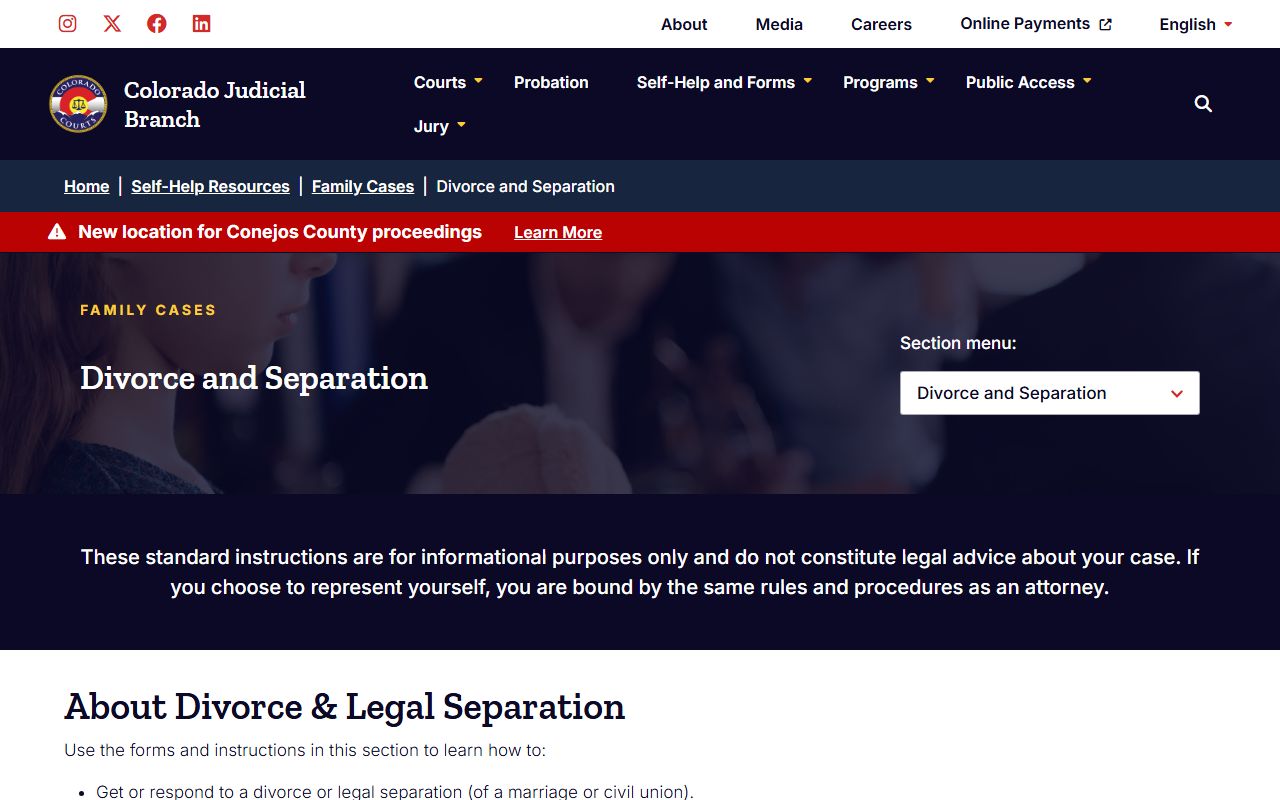
The Colorado self-help divorce page offers forms and instructions for people filing without lawyers. All JDF forms are free to download.
Property And Asset Division
Dividing property is a big part of any dissolution case. Colorado law requires fair division, not equal division. The court follows C.R.S. § 14-10-113 to determine who gets what. Judges look at several factors: how long the marriage lasted, what each spouse contributed, each person's financial situation, and the value of all assets.
Marital property includes anything bought or earned during the marriage. Separate property is what you owned before you got married or received as a gift or inheritance. Separate property usually stays with the original owner. But sometimes separate and marital property get mixed. That's called commingling. If you put inheritance money into a joint account, it might become marital property.
Houses, cars, bank accounts, retirement plans, and businesses all get divided. Retirement benefits earned during the marriage are marital property. The court can split them using a special order. For PERA plans in Colorado, use form JDF 1202. Debts also get divided. Credit card debt, mortgages, and loans incurred during marriage are shared obligations unless one spouse took on debt for personal reasons after separation.
Spousal Maintenance Guidelines
Spousal maintenance, also called alimony, may be part of your decree. Colorado has advisory guidelines in C.R.S. § 14-10-114. These guidelines apply to cases filed after January 1, 2014. They give a formula based on combined income and marriage duration. The court can follow the guidelines or adjust them based on specific circumstances.
Maintenance isn't automatic. The requesting spouse must show a need. The other spouse must have the ability to pay. Factors include age, health, earning capacity, and standard of living during the marriage. If the marriage lasted less than three years, maintenance is often limited or denied. Longer marriages may result in longer maintenance terms.
Maintenance can be temporary or permanent. Temporary maintenance lasts during the case. It ends when the decree is signed. Permanent maintenance continues after the decree. The term "permanent" is misleading. Most maintenance has a set end date. If circumstances change, either party can ask the court to modify the amount.
Accessing Court Records
Dissolution of marriage records in Dolores County are public, with some limits. The final decree is usually open to anyone. Case files with child custody details, parenting plans, or financial agreements may be restricted. Under Chief Justice Directive 05-01, certain documents are confidential.
To get records, use the online form at https://www.coloradojudicial.gov/recorddocument-request-form. Fill in the case number and parties' names. The court usually responds in three business days. If you don't have a case number, you can do a name search for $5.
You can also visit the clerk's office in person. Bring photo ID if you're a party to the case. The clerk can look up cases by name or case number. Viewing records at the courthouse is often free. Copies cost $0.25 per page. If you are a party to the case, the maximum copy fee is $15 no matter how many pages. Non-parties pay the full per-page rate. Certified copies cost $20 per document. These are needed for legal matters like remarriage or Social Security claims.
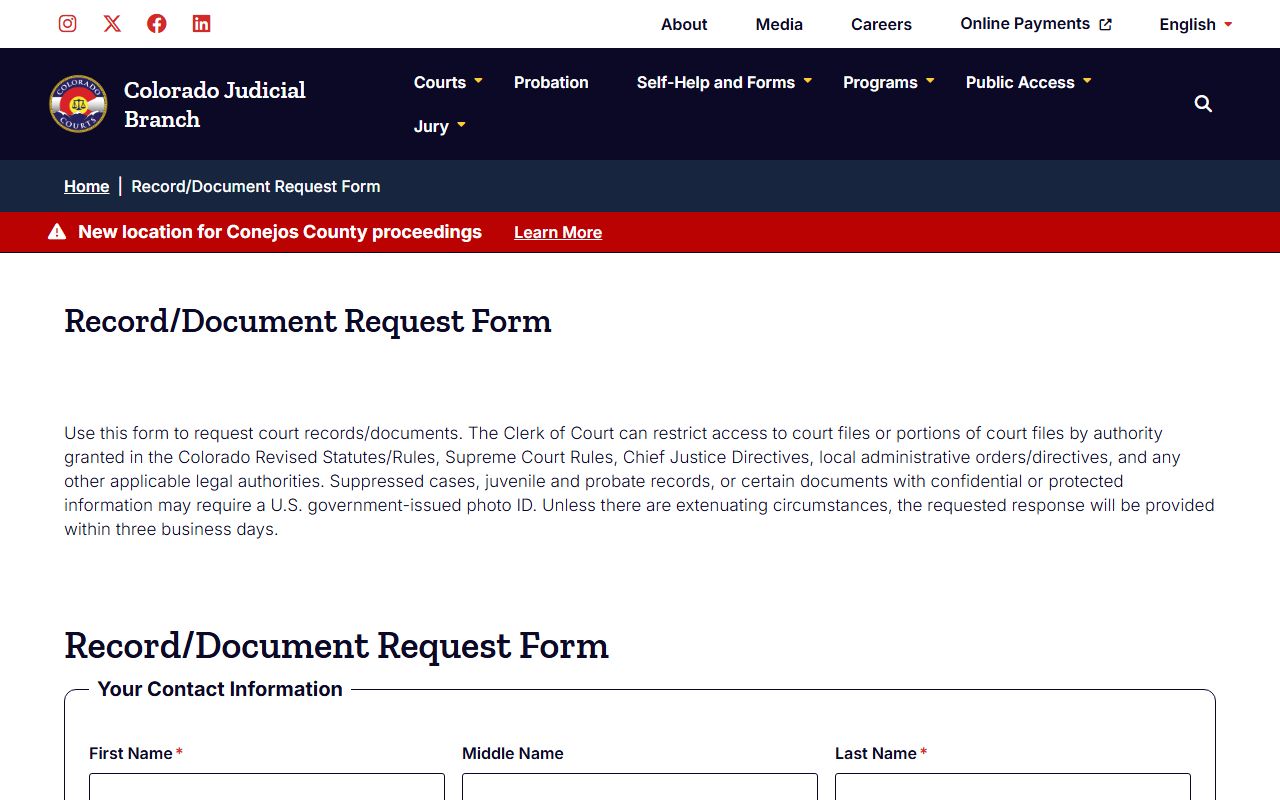
The online records request form lets you get documents without going to Dove Creek. Submit your request and wait for the court to contact you.
Fee Waivers And Cost Relief
If you cannot afford the filing fee, you can ask for a waiver. Colorado law provides fee waivers for indigent parties under C.R.S. § 13-32-104. To qualify, you must show financial hardship. Fill out the Motion to File Without Payment form. Attach proof of income, like pay stubs or benefits statements. The court will review your request and decide whether to grant the waiver.
Fee waivers cover filing fees, service fees, and copy costs. They do not cover attorney fees if you hire a lawyer. If your waiver is granted, you can proceed with your case without paying upfront costs. This helps people who need legal relief but lack resources.
Self-Help Resources
Many people handle dissolution cases without lawyers. Colorado provides free resources to help. The self-help section has step-by-step guides. It explains how to fill out forms, file them, and serve the other party. The instructions are written in plain language.
Forms include the petition, response, separation agreement, and parenting plan. If you have no kids and agree on everything, you can use the simplified procedure. Form JDF 1018, Affidavit for Decree Without Appearance, lets the judge sign the decree without a hearing. This saves time and avoids court appearances.
If you need help with forms, contact the clerk's office. Clerks cannot give legal advice, but they can answer procedural questions. For legal guidance, consider contacting Colorado Legal Services or a local legal aid group. Some areas have family law facilitators who help with paperwork for free or low cost.
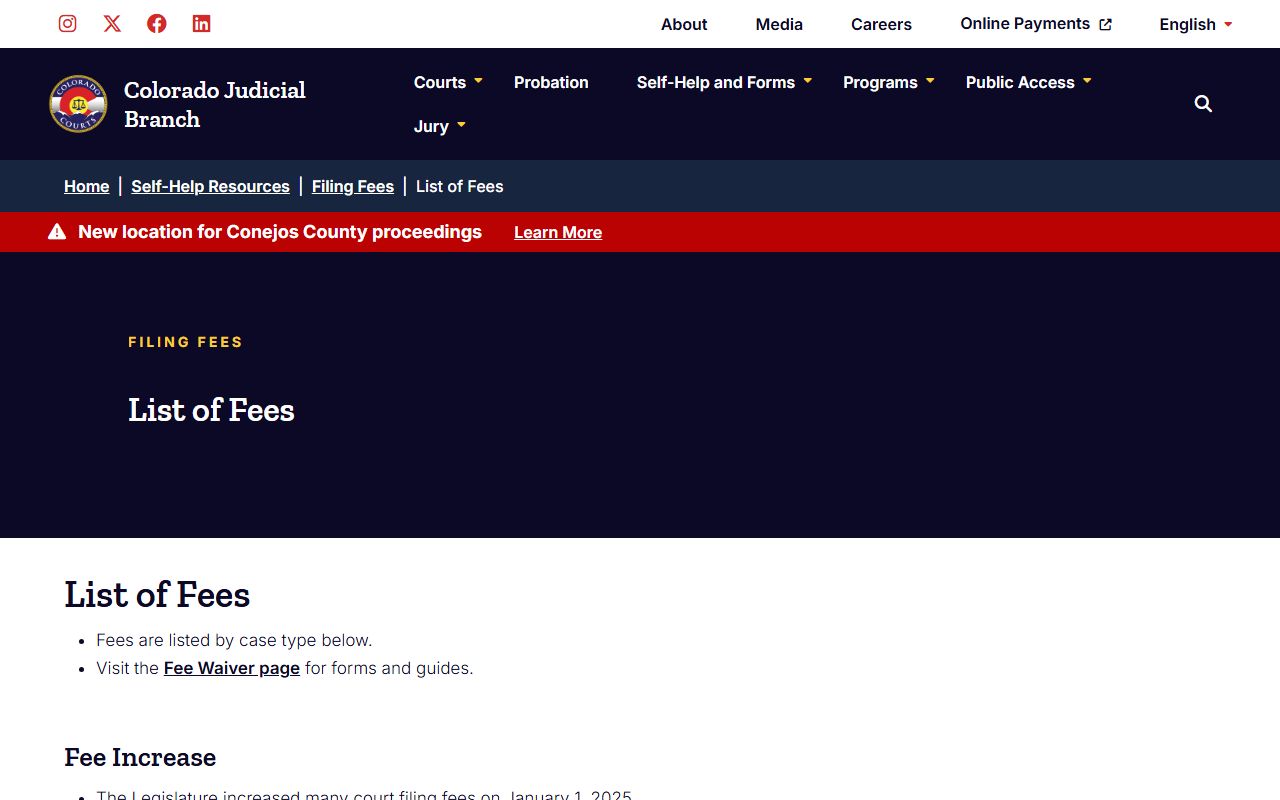
The full fee schedule shows costs for all family law filings, from petitions to modification motions. Knowing these fees helps you plan your case.
Name Restoration After Dissolution
If you took your spouse's last name during marriage, you can restore your former name. You can request this in your petition or response using form JDF 1011 or JDF 1015. The decree will include the name change. If you decide later, file form JDF 1824, Motion for Name Restoration. There is no fee if you file within 60 days of the decree. After that, standard filing fees apply.
Once the court orders the name change, you can use the decree to update your Social Security card, driver's license, and other records. Make several certified copies of the decree for this purpose.
Court Location And Hours
The 22nd Judicial District court for Dolores County is located in Dove Creek. For the exact address, phone number, and hours, visit https://www.coloradojudicial.gov/courts/trial-courts/dolores-county. The court typically operates Monday through Friday during business hours. Some services may close for lunch. Call ahead if you plan to visit.
For general questions about Colorado courts, contact the state court administrator's office at 720-625-5000. You can also email public.access@judicial.state.co.us. For specific case questions, contact the Dolores County clerk directly.
Third-Party Record Searches
In addition to official court records, you can use commercial databases. CoCourts.com is a third-party site approved by the Colorado Judicial Branch. It provides access to the Register of Actions for civil, domestic, and criminal cases. This shows case filings, hearings, and outcomes, but not full documents. To get actual documents, you must still contact the court.
CoCourts.com charges a fee for searches. It covers most Colorado counties, including Dolores. The data updates in real time. Remember that online databases may have errors or omissions. For official records, always verify with the court.
Nearby Counties
Dolores County shares the 22nd Judicial District with Montezuma County. Each county maintains its own clerk's office and case files. If you need records from a neighboring county, contact that county's clerk. Links to nearby counties: