Search Eagle County Divorce Records
Eagle County handles dissolution of marriage cases through the 5th Judicial District Combined Court in Eagle. This court processes all family law matters for residents in the county. The clerk's office keeps files for every dissolution petition filed locally. If you need to start a new case or find existing records, you go through this court. Colorado law requires one spouse to be a state resident for at least 91 days before filing. This rule is in C.R.S. § 14-10-106. Once you file, you must wait another 91 days before the judge can sign a final decree. These two waiting periods let both parties address property, custody, and support issues in a fair way.
Court Information
County Seat: Eagle
Judicial District: 5th
Population: ~55,000
How To File
Filing for dissolution of marriage in Eagle County starts at the courthouse. The filing fee is $260 under C.R.S. § 13-32-101. That fee is standard across all Colorado counties. You need to complete form JDF 1011, the Petition for Dissolution of Marriage. Get the form from https://www.coloradojudicial.gov/self-help/divorce-and-separation. Download it for free and fill it out carefully.
After filing, the clerk assigns a case number. Write this down. You will use it for all future filings and when you request documents. The petition must be served on your spouse. You cannot do this yourself. Use a process server, the sheriff's office, or ask the clerk to mail it. Service proves the other party knows about the case.
Colorado follows a no-fault approach. You do not have to prove adultery or abuse. Just state the marriage is irretrievably broken. That's enough. When you file, automatic temporary injunctions take effect under C.R.S. § 14-10-107. These injunctions prevent either spouse from selling assets, hiding money, or taking children out of state without permission.
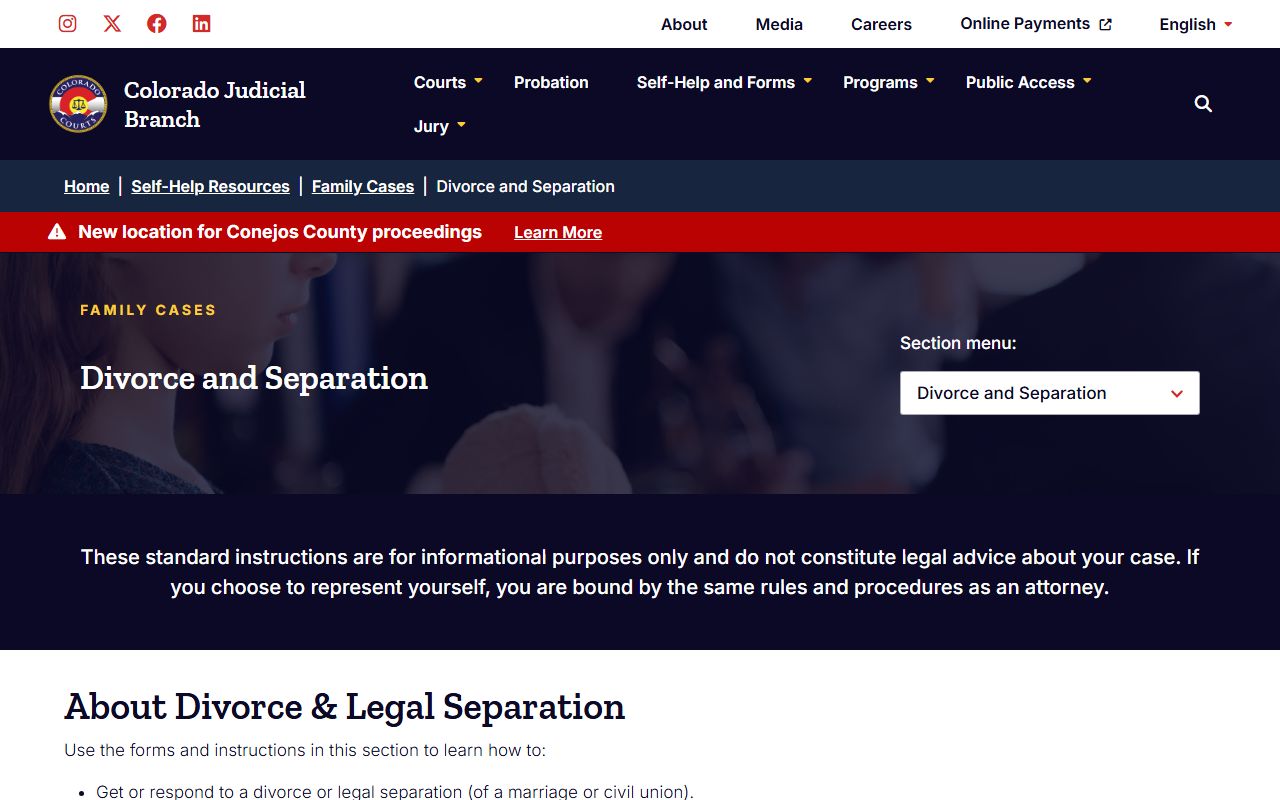
The Colorado Judicial Branch self-help page has all the forms and instructions you need for dissolution cases. Use these resources if you're filing without an attorney.
Dividing Marital Property
One of the main tasks in dissolution of marriage is dividing property. Colorado law says property must be divided fairly, not necessarily equally. The court applies C.R.S. § 14-10-113 when making decisions. Judges consider how long you were married, what each spouse put into the marriage, each person's financial condition, and the total value of assets and debts.
Marital property is anything you acquired during the marriage. That includes wages, homes bought together, cars, and bank accounts. Separate property is what you owned before marriage or received as a gift or inheritance during the marriage. Generally, separate property stays with the original owner. However, if separate property mixes with marital property, it may become marital. This is called commingling. For example, if you deposit inheritance money into a joint account and use it for household expenses, it could be treated as marital.
Real estate, vehicles, retirement accounts, and business interests all get divided. Retirement benefits earned during the marriage are marital property. The court can divide them with a qualified domestic relations order. Colorado PERA plans require form JDF 1202. Debts are also divided. Credit cards, mortgages, and loans taken during the marriage are shared unless one person incurred the debt for personal reasons after separation. The court tries to balance assets and debts so both parties leave in similar financial positions.
Spousal Maintenance Awards
Spousal maintenance, sometimes called alimony, may be ordered in your case. Colorado uses advisory guidelines set out in C.R.S. § 14-10-114. These guidelines apply to cases filed on or after January 1, 2014. They provide a formula based on the couple's combined income and how long the marriage lasted. The court can follow the formula or adjust it for special circumstances.
Maintenance is not guaranteed. The spouse asking for it must prove financial need. The other spouse must have the ability to pay. Judges look at age, health, job skills, and the lifestyle during the marriage. Marriages shorter than three years rarely result in long-term maintenance. Longer marriages often lead to longer maintenance terms. Maintenance can be temporary or long term. Temporary maintenance covers the period during the case and ends when the decree is signed. Long-term maintenance continues after the decree, usually for a set number of months or years.
Either party can ask the court to change the maintenance amount if circumstances change. Loss of a job, serious illness, or remarriage can all trigger a modification request. The requesting party must file a motion and show the court what changed.
Getting Copies Of Records
Dissolution of marriage records in Eagle County are public, but with exceptions. The final decree is almost always available to the public. Files containing child custody arrangements, parenting plans, or financial details may be restricted. Chief Justice Directive 05-01 governs what can be released.
To request records, fill out the online form at https://www.coloradojudicial.gov/recorddocument-request-form. Provide the case number and the names of both parties. The court aims to respond within three business days. If you don't know the case number, the clerk can do a name search for a $5 fee.
You can also go to the courthouse in Eagle and ask to view files in person. If you are a party to the case, bring a government-issued photo ID. The clerk will pull the file for you. Viewing the file at the courthouse is usually free. If you want copies, they cost $0.25 per page. Parties to the case pay a maximum of $15 no matter how many pages. Non-parties pay the per-page rate with no cap. Certified copies are $20 per document. You need certified copies for legal purposes like Social Security benefits or getting married again.
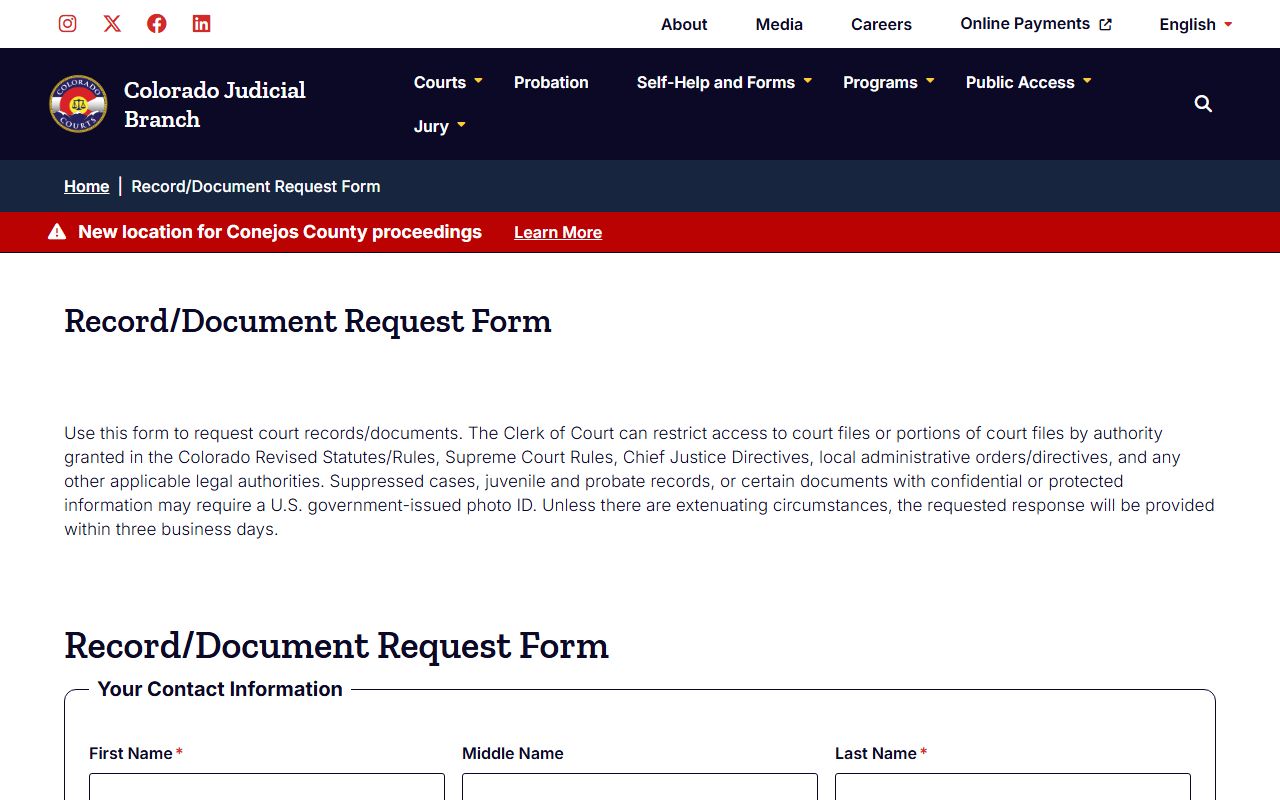
Use the online records request form to get dissolution of marriage documents without visiting the courthouse. Submit your request and the court will contact you.
Fee Waivers For Low Income
If you cannot pay the $260 filing fee, you may qualify for a waiver. Colorado law allows fee waivers for people with low income under C.R.S. § 13-32-104. To request a waiver, file a Motion to File Without Payment. You must show proof of income, such as pay stubs, benefits statements, or a letter from your employer. The court reviews your financial situation and decides whether to grant the waiver.
A waiver covers the filing fee and may cover service fees and copy costs. It does not pay for a lawyer if you hire one. If approved, you can move forward with your case without paying upfront. This helps people who need legal help but don't have the money.
Self-Help And Legal Aid
Many people in Eagle County file for dissolution without hiring an attorney. Colorado offers free resources to help. The self-help section has detailed instructions. It walks you through filling out forms, filing them, and serving them on the other party. The language is clear and easy to follow.
You will find forms for the petition, response, separation agreement, and parenting plan. If you and your spouse agree on everything and have no children, you can use a simplified process. Form JDF 1018, Affidavit for Decree Without Appearance, allows the judge to sign your decree without a hearing. This saves you a trip to court.
If you need help with the forms, contact the clerk's office. Clerks can answer questions about procedure but cannot give legal advice. For legal guidance, reach out to Colorado Legal Services or a local legal aid office. Some counties have family law facilitators who assist with forms for free or at low cost.
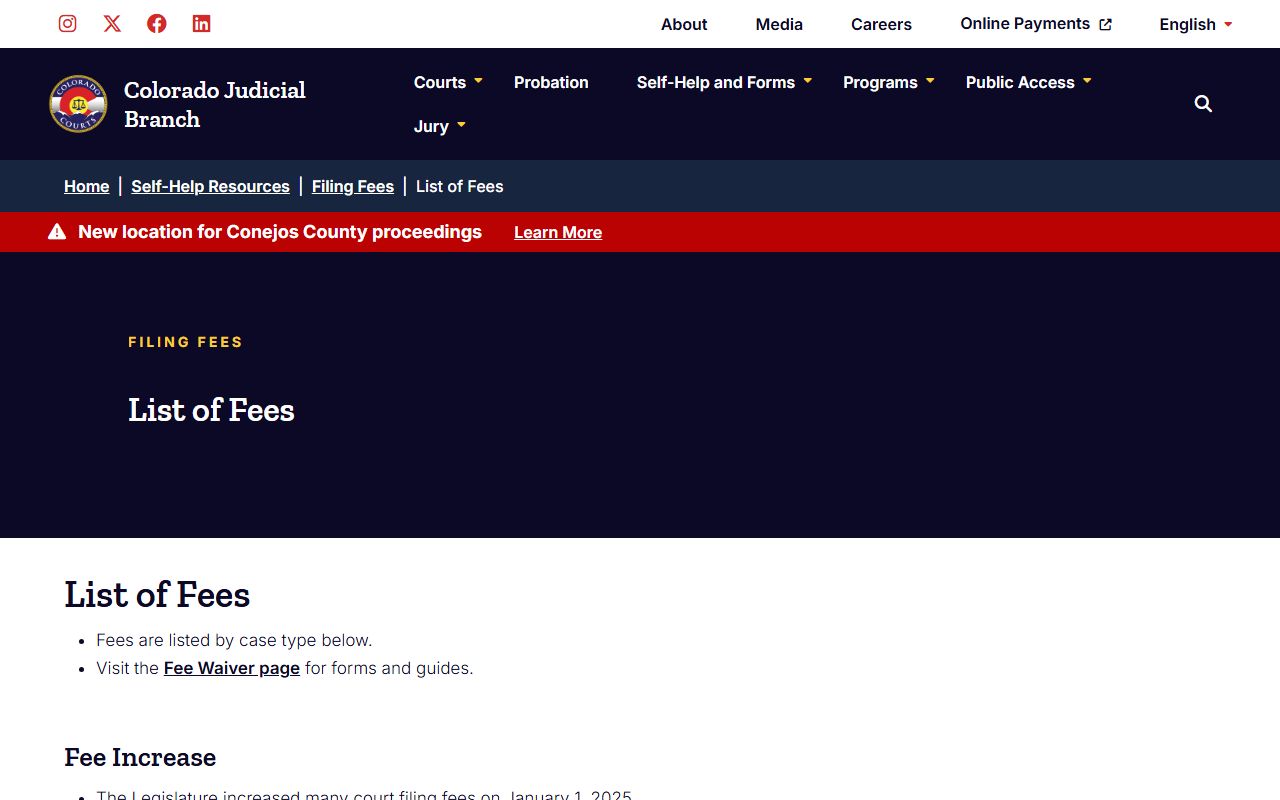
The complete fee schedule lists all court costs for family law cases. Review it before you file so you know what to expect.
Restoring Your Former Name
If you changed your last name when you got married, you can restore your former name through the dissolution decree. Include your name change request in your petition or response using form JDF 1011 or JDF 1015. The judge will add it to the final decree. If you decide later that you want to restore your name, file form JDF 1824, Motion for Name Restoration. There is no fee if you file within 60 days after the decree is signed. After that, regular filing fees apply.
Once the court grants the name change, use certified copies of the decree to update your Social Security card, driver's license, bank accounts, and other records. Order several certified copies from the clerk's office for this purpose.
Court Contact Details
The 5th Judicial District court for Eagle County is located in Eagle. For the address, phone number, and hours of operation, visit https://www.coloradojudicial.gov/courts/trial-courts/eagle-county. The court is generally open Monday through Friday during standard business hours. Some offices close for lunch. Call ahead to confirm before you visit.
For general questions about Colorado courts, call the state court administrator's office at 720-625-5000. You can also email public.access@judicial.state.co.us. For questions about a specific case, contact the Eagle County clerk directly.
Online Record Databases
Besides official court files, you can search third-party databases. CoCourts.com is a commercial site authorized by the Colorado Judicial Branch. It provides access to the Register of Actions for civil, domestic, and criminal cases statewide. The Register of Actions lists filings, hearings, and case outcomes. It does not include full documents. For documents, you must request them from the court.
CoCourts.com charges a fee for access. It covers Eagle County and most other Colorado counties. The database updates in real time. Keep in mind that online databases may have errors or missing information. For official records, always confirm with the court.
Nearby Counties
Eagle County is in the 5th Judicial District along with Clear Creek, Lake, and Summit counties. Each county has its own clerk's office and case files. If you need records from a nearby county, contact that county directly. Links to nearby counties: